
About Article
Research article • Volume 1, Issue 1, Pages 16–22 (2026) 100003
Molecular Insights into Arylsulfatase B Mutation-Induced Instability in Mucopolysaccharidosis Type VI
https://doi.org/10.53295/cmb.v1.i1.100003
Under a Creative Commons license
Open access
Abstract
Mutations in the arylsulfatase B (ARSB) gene are directly implicated in mucopolysaccharidosis type VI (MPS VI). Several non-synonymous single-nucleotide polymorphisms (nsSNPs) in ARSB have been associated with disease pathogenesis. A comprehensive evaluation of these variants is essential to understand their structural and functional consequences. In this study, a systematic in silico analysis was performed to identify deleterious nsSNPs in the ARSB gene. Initially, 430 nsSNPs were evaluated using sequence-based prediction tools, including SIFT, PolyPhen-2, FATHMM, and Mutation Assessor. Subsequently, 141 nsSNPs were subjected to structure-based stability analysis using MAESTROweb, SDM2, mCSM, and DynaMut2, of which 57 variants overlapped with previous reports. High-confidence deleterious nsSNPs were further assessed for pathogenicity using PMut and MutPred2 servers. Our integrated computational approach identified 44 highly deleterious mutations. Aggregation propensity analysis revealed that 29 of these variants exhibit increased aggregation tendencies, while one variant demonstrated progressive loss of solubility. Molecular dynamics simulations further indicated that high-confidence deleterious nsSNPs significantly disrupt ARSB structural integrity, enhance molecular flexibility, reduce structural rigidity, and promote atomic-level aggregation. Overall, this study provides mechanistic insights into how pathogenic mutations destabilize the ARSB protein and contribute to MPS VI pathogenesis, highlighting potential targets for future therapeutic investigation.
Keywords: ARSB gene, mucopolysaccharidosis type VI, non-synonymous SNPs, pathogenic mutations, protein stability, protein aggregation, genetic variation, computational mutagenesis
Introduction
Lysosomes function as acidic cellular hubs for macromolecule catabolism, recycling, and signaling via hydrolytic enzymes and efflux permeases. Lysosomal storage diseases (LSD), also known as dysostosis multiplex, are due to an acquired shortage of specific lysosomal enzymes (Platt et al., 2018). These diseases are frequently linked to numerous impairments of musculoskeletal growth and formation. Deficiencies in lysosomal enzymes or associated proteins cause substrate accumulation, such as sphingolipids, glycosaminoglycans (GAGs), or oligosaccharides, leading to over 41 progressive LSDs, most of which are autosomal recessive, except for X-linked Fabry disease and MPS II (Scerra et al., 2022). These disorders exhibit heterogeneous phenotypes, from neonatal lethality (e.g., non-immune hydrops fetalis) to later-onset forms (e.g., Niemann-Pick type C), with multi-organ involvement including neurological, skeletal, ophthalmic, and visceral symptoms. Pathophysiology stems from intra-lysosomal storage disrupting signaling pathways, mitochondrial function (e.g., fragmented cristae and reduced membrane potential in MPS VI, GM1 gangliosidosis), and tissue integrity; LSDs are classified by accumulated substrates, such as sphingolipidoses, mucopolysaccharidoses (MPS), and oligosaccharidosis (Gros and Muller, 2023).
Mucopolysaccharidosis type VI (MPS VI), also known as Maroteaux-Lamy syndrome, is an autosomal recessive lysosomal storage disorder caused by mutations in the arylsulfatase B (ARSB) gene, which encodes N-acetylgalactosamine-4-sulfatase (Tobacman and Bhattacharyya, 2022). This enzyme hydrolyzes sulfate groups from dermatan sulfate (DS) and chondroitin-4-sulfate, preventing their lysosomal accumulation (Rossi et al., 2025). GAGs are major components of the extracellular matrix and play critical roles in connective tissue structure, cell signaling, and tissue integrity. Proper ARSB activity ensures normal lysosomal function, cellular homeostasis, and continuous turnover of connective tissue components in skin, cartilage, tendons, and other organs. Deficient ARSB activity leads to progressive GAG buildup in multiple tissues, manifesting as dysostosis multiplex with musculoskeletal dysplasia, joint stiffness, corneal clouding, cardiac valve disease, hepatosplenomegaly, and respiratory complications (Leal et al., 2025).
Clinical severity varies widely; severe cases present symptoms by age 2-3, with loss of ambulation by age 10 and survival into the third decades (Leal et al., 2025). Diagnosis integrates clinical evaluation, urinary GAG quantification, enzymatic assays, and ARSB genotyping. While primarily somatic, MPS VI shares skeletal and visceral features with other MPS disorders, driven by GAG-mediated connective tissue pathology, including alterations in the extracellular matrix and cardiac infiltrates (Lipiński et al., 2025). Musculoskeletal defects, joint rigidity, ocular obscuration, cardiac issues, and breathing difficulties are among the clinical symptoms of MPS VI (De Ponti et al., 2022).
Single-nucleotide polymorphisms (SNPs) represent the most common genomic variants, driving evolutionary adaptation and disease susceptibility (Sinha et al., 2022). Non-synonymous single-nucleotide polymorphisms (nsSNPs) in ARSB represent a major mutational class, potentially disrupting protein stability, folding, or interactions via amino acid substitutions in conserved domains (Sinha et al., 2022). Over 200 ARSB variants have been reported, yet their structural-functional impacts remain incompletely characterized, complicating prognosis and therapy selection amid emerging options such as enzyme replacement, gene therapy, and substrate reduction (Gomez-Ospina, 2024).
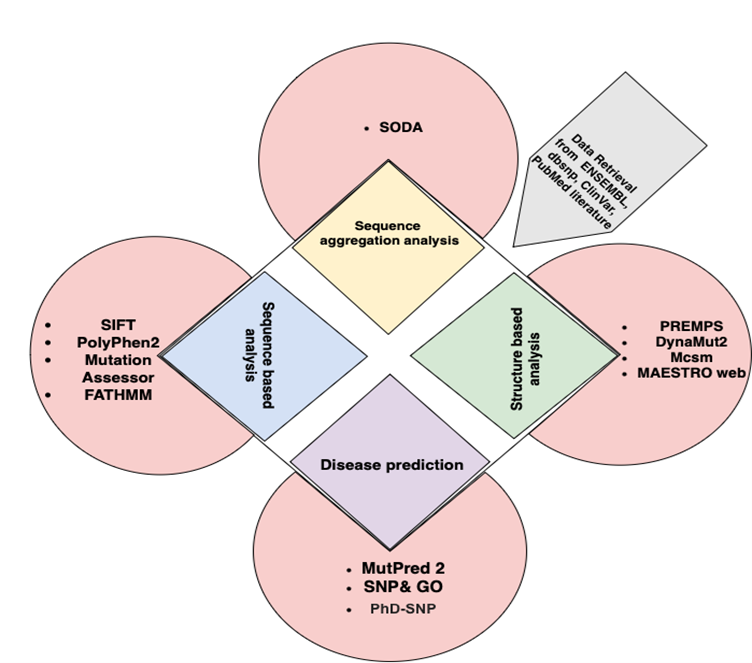
This study employs an integrated in silico pipeline comprising SIFT, PolyPhen-2, FATHMM, Mutation Assessor, MAESTROweb, SDM2, mCSM, DynaMut2, PMut, MutPred2, and molecular dynamics simulations to systematically evaluate 430 ARSB nsSNPs (Enni, 2025). Figure illustrates computational methods that integrate sequence-, structure-, and dynamics-based approaches to systematically identify pathogenic variants in ARSB associated with MPS VI. We prioritize high-confidence deleterious variants, assess their aggregation propensity and changes in stability, and elucidate their mechanistic contributions to MPS VI pathogenesis, thereby informing precision diagnostics and therapeutic strategies (Sarachakov et al., 2025).
2. Materials and Methods
2.1. Data retrieval
The FASTA sequence of the human ARSB gene was obtained from the UniProt database (UniProt ID: P15848). A database of missense mutation SNPs was created using information gathered through a PubMed literature review and databases such as dbSNP, HGMD, ClinVar, and Ensemble. The list was cleared of the redundant nsSNPs. The Protein Data Bank (PDB ID: 1FSU) provided the crystal structure of human ARSB. The remaining mutations were obtained from the Ensembl databases, and all mutation types, including missense, non-synonymous, and synonymous mutations, were included (Dyer et al., 2025).
Figure 1. A description of the computational methods used to forecast the pathogenicity of the ARSB gene mutation at the structural and functional domains.
Download: Download full-size image
2.2. Sequence-Based Prediction of Deleterious Mutations
Sorting Intolerant From Tolerant (SIFT: http://sift.jcvi.org/) was used to predict the functional impact of amino acid substitutions based on sequence homology and evolutionary conservation (Sim et al., 2012). The underlying principle is that functionally important residues are conserved across species; therefore, substitutions at highly conserved positions are more likely to be deleterious. SIFT assigns a tolerance score ranging from 0 to 1, where scores indicate damaging (intolerant) substitutions and scores suggest tolerated variants. In addition to missense variants, SIFT can also evaluate certain 3-nucleotide indels that result in amino acid insertions or deletions. These predictions are based on conservation patterns derived from multiple sequence alignments.
PolyPhen-2. PolyPhen-2 (http://genetics.bwh.harvard.edu/pph2/) used to predict the potential structural and functional impact of amino acid substitutions using sequence-based and structure-based features. It incorporates evolutionary conservation, physicochemical differences between residues, and structural parameters such as solvent accessibility and proximity to functional domains (Adzhubei et al., 2013). The tool calculates the difference in Position-Specific Independent Count (PSIC) scores between wild-type and mutant residues. Variants are classified as benign, possibly damaging, or probably damaging, depending on the PSIC score difference and predictive confidence.
Mutation Assessor. Mutation Assessor (http://mutationassessor.org/) evaluates the functional impact of amino acid substitutions based on evolutionary conservation patterns within protein families and subfamilies (Sarachakov et al., 2025). It distinguishes between general conservation across homologous proteins and functional specificity within subfamilies. Each variant is assigned a Functional Impact (FI) score and categorized as neutral, low, medium, or high impact. Variants with FI scores are generally considered functionally deleterious.
FATHMM. Functional Analysis Through Hidden Markov Models (FATHMM) predicts the pathogenicity of missense mutations using Hidden Markov Models (HMMs) and conservation-based weighting schemes (Shihab, 2021). It can incorporate disease-specific or cancer-specific models. Variants are classified as tolerated or deleterious based on a threshold score, with lower scores indicating a higher likelihood of pathogenicity.
2.3. Structure-Based Stability Prediction
MAESTROweb. MAESTROweb (https://pbwww.che.sbg.ac.at/maestro/web) predicts mutation-induced changes in protein stability using machine-learning methods trained on experimental thermodynamic datasets. It calculates the change in Gibbs free energy () between wild-type and mutant proteins (Laimer et al., 2016). A negative value indicates destabilization of protein structure, whereas a positive value suggests stabilization. The tool also identifies mutation "hotspots" by scanning multiple residues.
mCSM. mCSM predicts the impact of mutations on protein stability and macromolecular interactions using graph-based structural signatures derived from atomic distance patterns. It estimates values, where negative scores indicate destabilizing mutations (Pires et al., 2014). Variants with significantly negative values are considered likely to disrupt protein stability and function.
DynaMut2. DynaMut2 (http://biosig.unimelb.edu.au/dynamut/) integrates Normal Mode Analysis (NMA) with graph-based signatures to evaluate mutation-induced changes in protein stability and dynamics (Rodrigues et al., 2021). It predicts both and changes in vibrational entropy (), allowing assessment of alterations in structural flexibility. This tool is particularly useful for understanding how mutations affect conformational dynamics, well to thermodynamic stability.
PremPS. PremPS (https://lilab.jysw.suda.edu.cn/research/PremPS/) predicts the impact of missense mutations on protein stability using a balanced dataset of stabilizing and destabilizing mutations (Chen et al., 2020). It integrates structural and evolutionary features to estimate values and classify variants as stabilizing or destabilizing.
2.4. Pathogenicity Prediction Tools
MutPred2. MutPred2 (http://mutpred.mutdb.org) is a machine learning-based tool that predicts the pathogenicity of amino acid substitutions and provides mechanistic insights into possible molecular alterations (Pejaver et al., 2020). It assigns a pathogenicity probability score ranging from 0 to 1. Variants with scores (commonly for high confidence) are considered likely pathogenic. Additionally, it predicts alterations in secondary structure, post-translational modification sites, catalytic residues, and protein-protein interactions.
SNPs&GO. SNPs&GO integrates sequence features and Gene Ontology (GO) annotations using a Support Vector Machine (SVM) classifier to distinguish disease-associated variants from neutral polymorphisms. The inclusion of functional annotations improves predictive accuracy (Capriotti et al., 2013).
PhD-SNP. PhD-SNP (https://snps.biofold.org/phd-snp/phd-snp.html) is an SVM-based predictor that classifies missense mutations as disease-associated or neutral using sequence and evolutionary profile information. Variants with scores are predicted to be disease-causing (Calabrese et al., 2008).
2.5. Evolutionary Conservation Analysis
ConSurf. ConSurf (https://consurf.tau.ac.il/) evaluates evolutionary conservation of amino acid residues using multiple sequence alignment and phylogenetic analysis (Ashkenazy et al., 2016). Conservation scores range from 1 (variable) to 9 (highly conserved). Highly conserved exposed residues are often functionally important, whereas conserved buried residues are typically structural (architectural). Disease-associated mutations frequently occur at highly conserved positions.
2.6. Aggregation Propensity Analysis
SODA. SODA (Solubility based on Disorder and Aggregation) predicts the impact of mutations on protein solubility, secondary structure, and aggregation propensity. It helps identify variants that may promote protein misfolding or aggregation, which is relevant in disorders associated with lysosomal dysfunction (Paladin et al., 2017).
Arpeggio. Arpeggio analyzes interatomic interactions within protein structures by categorizing them into hydrogen bonds, van der Waals contacts, hydrophobic interactions, and ionic interactions. It accepts PDB structures and generates quantitative interaction profiles, enabling comparison between wild-type and mutant proteins to assess structural disruption (Jubb et al., 2017).
3. Results and Discussion
MPS VI, a lysosomal storage disease, is caused by ARSB deficiency (Tomanin et al., 2018). The accumulation of GAGs caused by this enzyme deficiency leads to a variety of clinical symptoms, including skeletal deformities, stiff joints, and corneal clouding. MPSVI usually has serious progression, with symptoms that start in early childhood and worsen over time (Pohl et al., 2018). Determining the molecular mechanisms driving this condition requires knowledge of the variants in the ARSB gene and their effects on protein function. In this investigation, we looked at the possibility that harmful mutations in ARSB contribute to the pathophysiology of MPSVI.
We sought to identify alterations that could have a major effect on the stability and function of the ARSB protein by employing a comprehensive strategy that combines sequence- and structure-based analyses (Leal et al., 2025). Sequence-based methods, including SIFT, PolyPhen2, FATHMM, and Mutation Assessor, were used to predict the detrimental consequences of mutations. Structure-based techniques were used to evaluate the effects of changes on protein structure and aggregating propensity, including mCSM, DynaMut2, MAESTROweb, and PremPS. Our study's key finding is that these mutations may affect protein solubility, a defining characteristic of MPS VI. We thoroughly analysed 1224 ARSB gene variants obtained from the dbSNP and Ensembl databases, as well to other mutations identified. We investigated the effects of these alterations on the structure and function impacts of variations or mutations within the ARSB gene.
Five web-based resources were used to help the sequence-based evaluation: SIFT, PolyPhen2, FATHMM, and Mutation Assessor. Simultaneously, the structure-based method assessed single-point amino acid alterations in ARSB using mCSM, DynaMut2, MAESTROweb, and PremPS. Only mutations that the analyses showed to be high-confidence variations were sent for additional testing. We used the PhD-SNP and MutPred2 websites to explain the illness characteristics associated with these high-confidence variants, as will be covered in the sections that follow.
3.1. Deleterious mutations identification of nsSNPs
Sequence-based evaluation was performed on all nsSNPs utilising five online tools: SIFT, PolyPhen2, PROVEAN, Mutation Assessor, FATHMM Using the structure-based approach, 141 nsSNPs located in the ARSB gene were analysed (Table S1) using PremPs, MAESTROweb, DynaMut2, and mCSM. As the sole region identified through experimentation and available in the PDB database, only the highly probable nsSNPs have been selected for additional investigation. Using the PMut web server and MutPred2, high-probability nsSNPs' disease phenotypes were identified. We utilised FATHMM, SIFT, PolyPhen2, and SNPs&GO. Based on protein physical characteristics, SIFT classifies variants as either intolerant or tolerated; higher scores indicate a higher likelihood of toxicity. The study of 1224 single-point amino acid changes in ARSB using the sequence-based approach produced predictions from SIFT, PolyPhen2, Mutation Assessor, and FATHMM. These tools, particularly, highlighted the dangerous substitutions 302, 264, 238, and 167 (Figure 2). By combining these sequence-based predictive techniques, we were able to examine the possible molecular effects of mutations on functioning.
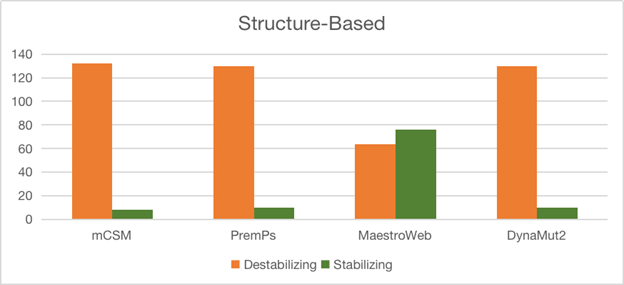
We used four different structure-based prediction technologies: DynaMut2, MAESTROweb, PremPS, and mCSM (Figure 2). By computing folding free energy, these tools assess the stability of variations by analysing atomic coordinates from the PDB file of the wild-type protein. Many of these tools use a machine-learning approach, combining different biophysics-based methodologies to predict the impact of variations on protein stabilisation. Folded (Gf) and unfolded (Gu) forms are computed in thermodynamics using the formula . , wherein is the energy of the protein that has been altered, and is the energy of the wild-type protein, is used to assess the change in protein stability and the landscape of energy. A variation that stabilises a protein is indicated by a negative value, whereas a mutation that destabilises the protein is suggested by a positive score.
Figure 2. Deleterious mutations ARSB gene sequence-based approach. This graph illustrates the effects of mutation using a computational approach.
Download: Download full-size image
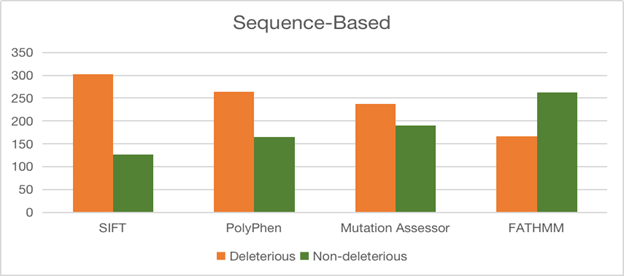
Figure 3. Deleterious mutations ARSB gene structure-based approach. This graph illustrates the effects of mutation using a computational approach.
Download: Download full-size image
3.2. Identification of pathogenic mutations using a computational approach
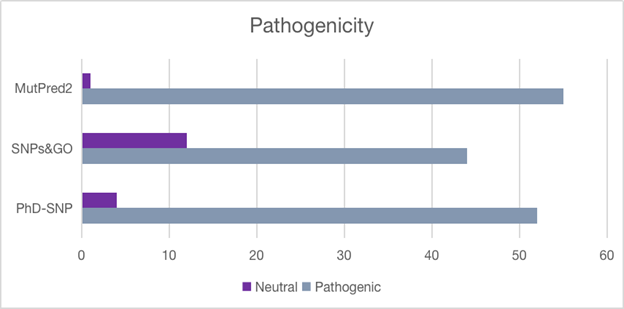
We evaluated disease characteristics linked to mutations using PhD-SNP, SNAP & GO, and MutPred2 approaches. These tools classify variants based to potential disease associations and assign pathogenicity levels (Figure 4). Among the 57 high-confidence variations identified through a sequence- and structure-based evaluation, PMut and MutPred predicted 44 as pathogenic. Only 44 mutations, A237D, C91R, E323K, E483D, G149R, G302R, G324V, G56D, G64R, H393P, I296N, I67N, K145E, L129P, L236P, L360P, L498P, L51P, L72P, L72R, L82P, L82R, L90P, L98P, L98R, P93R, R315P, R315Q, R327G, R327Q, R388T, T92K, V277G, V80G, W146R, W146S, W353R, W438G, Y138C, Y175D, Y210C, Y266S, Y86C, Y86N) out of 57 highly probable nsSNPs were shown to be harmful using the disease phenotype assessment algorithm (Table 3).
Figure 4. Pathogenic mutations predicted in the ARSB gene were predicted using structure-based tools.
Download: Download full-size image
3.3. Analysis of conserved residue
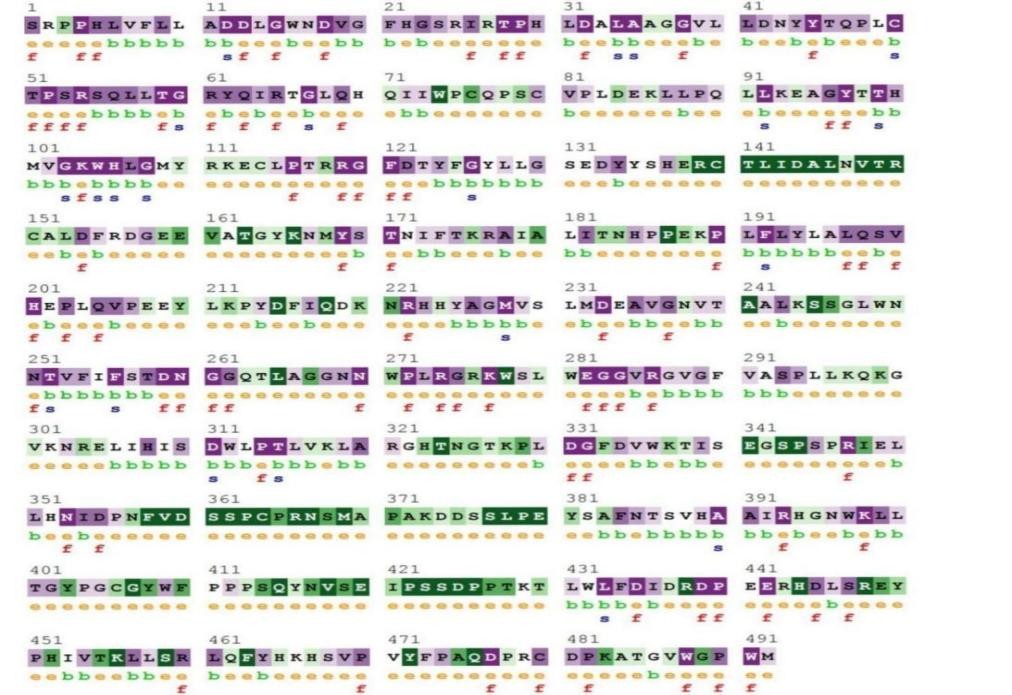
The ConSurf tool was utilised to analyse the human ARSB genome structure and assess residue conservation (Ashkenazy et al., 2016). According to the ConSurf study, out of 44 final mutations, these 12 (A237D, G56D, G64R, L51P, I67N, L236P, W353R, V277G, T92K, R315Q, R315P, H393P) can be highly disease-causing mutations, because they belonged in high conserved areas and mutations in these regions (Figure 5).
Figure 5. Conserved residue of the ARSB region.
Download: Download full-size image
3.4. Analysis of aggregation propensity
The aggregation, illness, helix, and strand propensities resulting from alterations are computed using SODA48. Out of 12 nsSNPs, 2 (A237D, W353R) were shown (Table 1) to lower the protein’s solubility, and 9 of them raised it, out of the 11 mutations revealed using illness phenotype prediction. The solubility of a protein significantly impacts its function. Insoluble proteins tend to congregate, which can lead to illnesses including Parkinson’s, amyloidosis, and Alzheimer’s. By combining solubility data with structural and sequence-based properties, SODA provides insights into protein regions susceptible to aggregation and suggests modifications that may improve solubility (Aggidis et al., 2024).
Figure 6. Mutant structure (A). Alanine mutated to Aspartic acid and (B). Tryptophan mutated to Arginine.
Download: Download full-size image
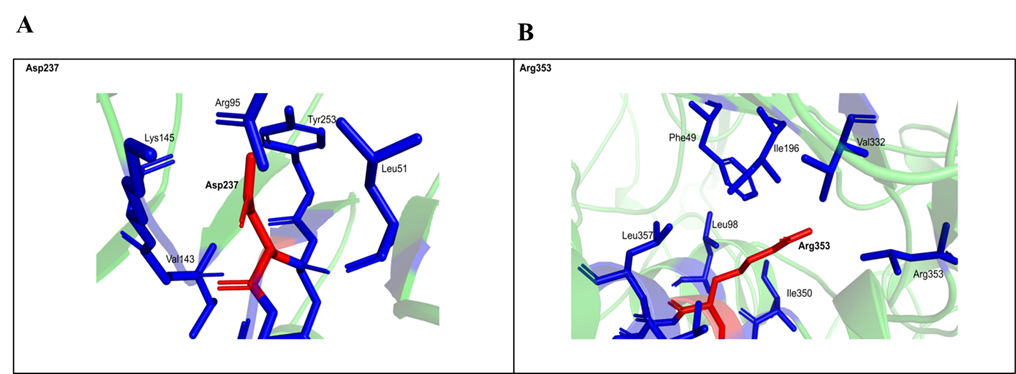
Table 1. Aggregation propensity prediction of mutant ARSB protein using SODA server.
| Sequence | SODA | Remark |
|---|---|---|
| A237D | -0.471 | Less soluble |
| G56D | 0 | More soluble |
| G64R | 4.558 | More soluble |
| H393P | 4.84 | More soluble |
| I67N | 1.308 | More soluble |
| L236P | 1.72 | More soluble |
| L51P | 11.762 | More soluble |
| R315P | 4.59 | More soluble |
| R315Q | 4.03 | More soluble |
| T92K | 2.878 | More soluble |
| V277G | 3.236 | More soluble |
| W353R | -0.676 | Less soluble |
Table 2. Comparing changes with their interactions between wild type and mutant structure
| Interactions | Wild type | Mutant (A237D) | Mutant (W353R) |
|---|---|---|---|
| Total number of contacts | [proximal+VdW clashinteraction] 71+3=74 | [Vdw+VdW clash+proximal] 1+11+119=131 | [Vdw+VdW clash+proximal] 4+7+119=130 |
| Polar contacts | 2 | 7 | 0 |
| Weak polar contacts | 2 | 4 | 4 |
| Hydrogen bond | 2 | 7 | 3 |
| Ionic interaction | 0 | 7 | 3 |
| Carbonyl interaction | 1 | 1 | 0 |
| Hydrophobic contacts | 3 | 3 | 0 |
| Halogen bonds | 0 | 0 | 4 |
| Metal complex interaction | 0 | 0 | 0 |
| Hydrophobic contacts | 3 | 3 | 2 |
3.5. Aggregation Propensity
Treatment plans to mitigate the effects of such harmful mutations can be developed using the knowledge gained from this study (Israil et al., 2025). Creating medications or tiny compounds that stabilise the peptide, improve its ability to dissolve, or stop it from aggregating are some possible strategies. Additionally, by understanding the structural alterations caused by these mutations, tailored therapies that restore lost or normal protein function may be developed.
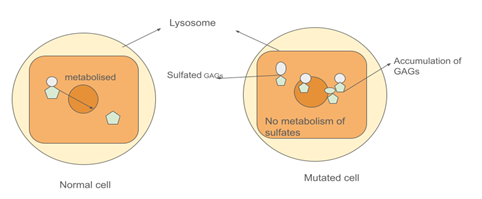
In the final analysis, our thorough examination of nsSNPs in the ARSB gene not only advances our understanding of the genetic underpinnings of associated illnesses but also lays the groundwork for developing effective treatments. The integration of structural, solubility, and sequencing research offers a comprehensive knowledge of the effects of pathogenic mutations. Two of the discovered mutations are located in highly conserved regions that may affect the gene's function, according to our ConSurf analysis. Using the Arpeggio web server, we further evaluated the aggregation properties and conducted additional structural analyses (Figure 7). We discovered two changes that reduce protein solubility, suggesting a possible role in ARSB aggregation and the ensuing illness. The identification of mutations with the greatest potential to contribute to disease pathophysiology was made possible by sequence-based analysis. Simultaneously, the predictions based on structure reinforced our belief that mutations could be crucial to the onset and progression of the disease.
Figure 7. ARSB mutation can cause accumulation of sulfated GAG in the lysosome, which may result in a lysosomal disorder.
Download: Download full-size image
3.6. Molecular Dynamics Simulation Analysis
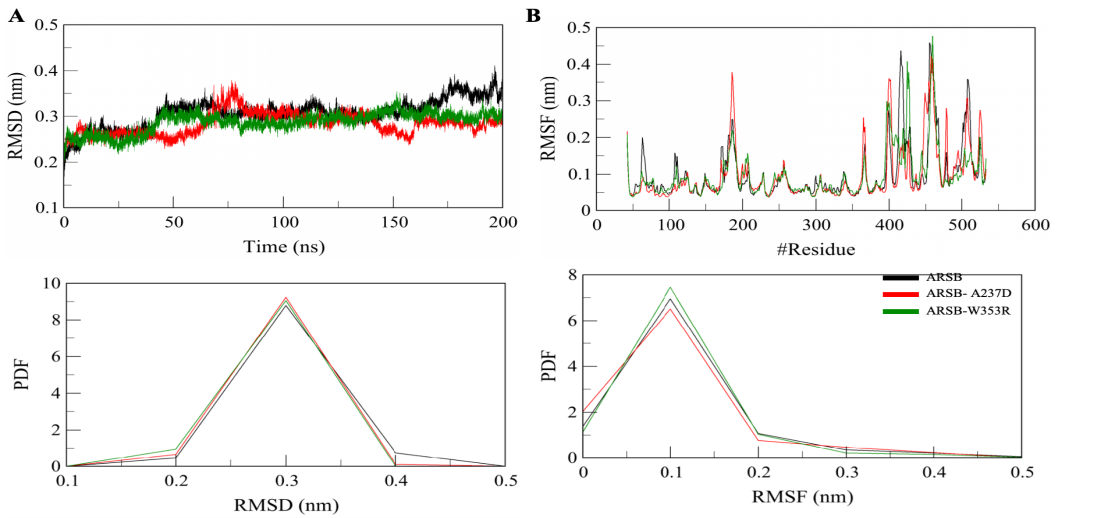
The wild-type ARSB protein, along with a few selected mutant variants, was subjected to molecular dynamics (MD) simulations to confirm the structural consequences of high-confidence deleterious substitutions. MD simulations provide dynamic insights into the stability, flexibility, and conformational behavior of proteins under physiologically relevant conditions, in contrast to static protein structure investigations.
Figure 8. Radius of Gyration (Rg) analysis indicating changes in compactness of wild-type and mutant ARSB proteins over time.
Download: Download full-size image
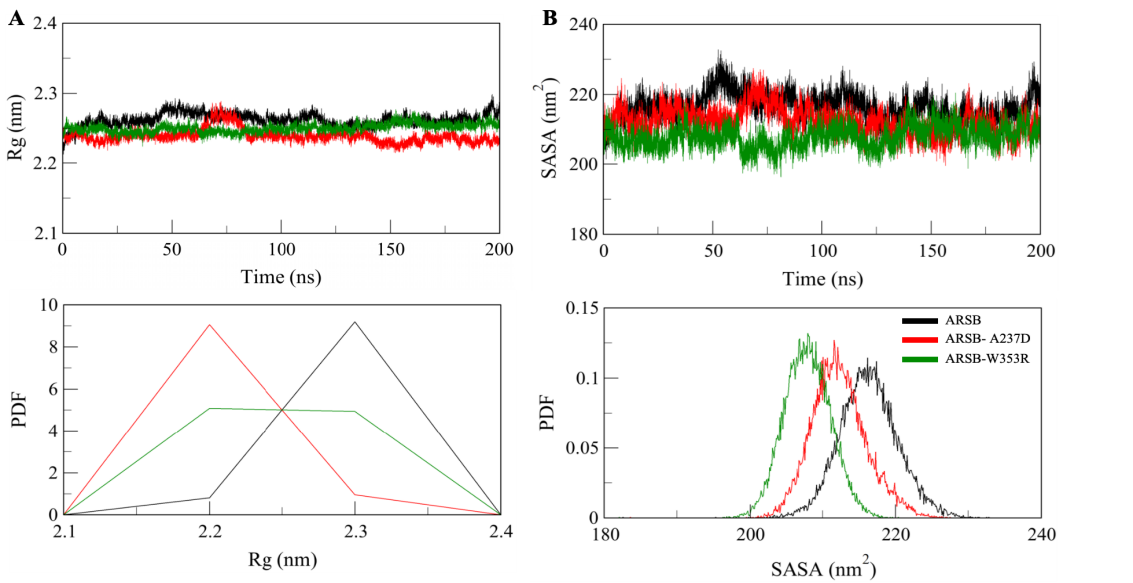
Figure 9. RMSD plot showing overall structural stability and conformational deviations of wild-type and mutant ARSB proteins during the simulation.
Download: Download full-size image
4. Conclusions
SNPs, or single-nucleotide polymorphisms, are thought to be among the most common genetic variations linked to several human disorders. 139 of the 429 mutations found are harmful and destabilising, according to sequence- and structure-based studies. A research investigation on pathogenicity found that 44 of the total number of variants are harmful. After consurf analysis of aggregation propensity, we found that 2 final mutations may be factors to causing disease. A thorough study of SNPs can provide insights into the mechanisms underlying disease development and inform the development of efficient therapeutic approaches. Our results indicate the importance of computational mutational analysis for understanding the genetic underpinnings of complex diseases such as MPS VI (Karageorgos et al., 2007). This study lays the foundation for future research to identify targeted therapy strategies and contributes to the expanding body of knowledge on the pathophysiology of MPS VI. In the end, the study highlights the importance to using cutting-edge computational methods to better understand the molecular pathways underlying disease pathology (Dissanayake et al., 2025).
5. Conflicts of Interest
The authors declare no conflict of interest.
6. Funding
This work received no funding.
7. Data availability statement
All data generated or analyzed during this study are included in this manuscript.
8. Declaration on the Use of AI Tools
The authors declare that ChatGPT (OpenAI) was used solely to refine the language, improve grammar, and enhance the clarity of the manuscript.
Table 3. Disease phenotype evaluation of higher certainty nsSNPs in the ARSB gene applying PMut, MutPred, and SNAP & GO estimation methods.
| Mutations | PhD-SNP | SNP & GO | MutPred2 | Remark | Mutations | PhD-SNP | SNP & GO | MutPred2 | Remark |
|---|---|---|---|---|---|---|---|---|---|
| A237D | Disease | Disease | 0.9 | Pathogenic | N84K | Neutral | Neutral | 0.64 | Benign |
| C91R | Disease | Disease | 0.923 | Pathogenic | P248A | Neutral | Neutral | 0.515 | Benign |
| E323K | Disease | Disease | 0.943 | Pathogenic | P531R | Neutral | Neutral | 0.947 | Benign |
| E483D | Disease | Disease | 0.871 | Pathogenic | P93R | Disease | Disease | 0.713 | Pathogenic |
| G149R | Disease | Disease | 0.947 | Pathogenic | R102H | Disease | Neutral | 0.614 | Benign |
| G302R | Disease | Disease | 0.967 | Pathogenic | R315P | Disease | Disease | 0.967 | Pathogenic |
| G324V | Disease | Disease | 0.946 | Pathogenic | R315Q | Disease | Disease | 0.89 | Pathogenic |
| G527R | Disease | Neutral | 0.931 | Benign | R327G | Disease | Disease | 0.96 | Pathogenic |
| G56D | Disease | Disease | 0.964 | Pathogenic | R327Q | Disease | Disease | 0.902 | Pathogenic |
| G64R | Disease | Disease | 0.715 | Pathogenic | R388T | Disease | Disease | 0.775 | Pathogenic |
| H393P | Disease | Disease | 0.889 | Pathogenic | R484G | Neutral | Neutral | 0.611 | Benign |
| I296N | Disease | Disease | 0.944 | Pathogenic | R66C | Disease | Neutral | 0.301 | Benign |
| I67N | Disease | Disease | 0.818 | Pathogenic | T92K | Disease | Disease | 0.639 | Pathogenic |
| K145E | Disease | Disease | 0.921 | Pathogenic | V277G | Disease | Disease | 0.882 | Pathogenic |
| L129P | Disease | Disease | 0.937 | Pathogenic | V332G | Disease | Neutral | 0.934 | Benign |
| L132P | Disease | Neutral | 0.735 | Benign | V48A | Disease | Neutral | 0.765 | Benign |
| L236P | Disease | Disease | 0.925 | Pathogenic | V80G | Disease | Disease | 0.746 | Pathogenic |
| L360P | Disease | Disease | 0.952 | Pathogenic | W146R | Disease | Disease | 0.967 | Pathogenic |
| L498P | Disease | Disease | 0.909 | Pathogenic | W146S | Disease | Disease | 0.97 | Pathogenic |
| L51P | Disease | Disease | 0.957 | Pathogenic | W353R | Disease | Disease | 0.914 | Pathogenic |
| L72P | Disease | Disease | 0.939 | Pathogenic | W438G | Disease | Disease | 0.908 | Pathogenic |
| L72R | Disease | Disease | 0.935 | Pathogenic | W450C | Disease | Neutral | 0.773 | Benign |
| L82P | Disease | Disease | 0.938 | Pathogenic | Y138C | Disease | Disease | 0.946 | Pathogenic |
| L82R | Disease | Disease | 0.94 | Pathogenic | Y175D | Disease | Disease | 0.957 | Pathogenic |
| L90P | Disease | Disease | 0.836 | Pathogenic | Y210C | Disease | Disease | 0.837 | Pathogenic |
| L98P | Disease | Disease | 0.91 | Pathogenic | Y266S | Disease | Disease | 0.861 | Pathogenic |
| L98R | Disease | Disease | 0.901 | Pathogenic | Y86C | Disease | Disease | 0.922 | Pathogenic |
| Y86N | Disease | Disease | 0.93 | Pathogenic |
References
I. Adzhubei, D. M. Jordan, S. R Sunyaev. Predicting functional effect of human missense mutations using PolyPhen-2. Current Protocols in Human Genetics. 76. 2013.
A. Aggidis, G. Devitt, Y. Zhang, S. Chatterjee, D. Townsend, N. J. Fullwood, E. R. Ortega, A. Tarutani, M. Hasegawa, A Cooper. A novel peptide-based tau aggregation inhibitor as a potential therapeutic for Alzheimer's disease and other tauopathies. Alzheimer's & Dementia. 20. 2024.
H. Ashkenazy, S. Abadi, E. Martz, O. Chay, I. Mayrose, T. Pupko, N Ben-Tal. ConSurf 2016: an improved methodology to estimate and visualize evolutionary conservation in macromolecules. Nucleic Acids Research. 44. 2016.
R. Calabrese, E. Capriotti, R Casadio. PhD-SNP: a web server for the prediction of human genetic diseases associated to missense single nucleotide polymorphisms. EMBNET08. 2008.
E. Capriotti, R. Calabrese, P. Fariselli, P. L. Martelli, R. B. Altman, R Casadio. WS-SNPs&GO: a web server for predicting the deleterious effect of human protein variants using functional annotation. BMC Genomics. 14. 2013.
Y. Chen, H. Lu, N. Zhang, Z. Zhu, S. Wang, M Li. PremPS: Predicting the impact of missense mutations on protein stability. PLoS Computational Biology. 16. 2020.
G. De Ponti, S. Donsante, M. Frigeni, A. Pievani, A. Corsi, M. E. Bernardo, M. Riminucci, M Serafini. MPSI manifestations and treatment outcome: skeletal focus. International Journal of Molecular Sciences. 23. 2022.
U. C. Dissanayake, A. Roy, Y. Maghsoud, S. Polara, T. Debnath, G. A Cisneros. Computational studies on the functional and structural impact of pathogenic mutations in enzymes. Protein Science. 34. 2025.
S. C. Dyer, O. Austine-Orimoloye, A. G. Azov, M. Barba, I. Barnes, V. P. Barrera-Enriquez, A. Becker, R. Bennett, M. Beracochea, A Berry. Ensembl 2025. Nucleic Acids Research. 53. 2025.
M. A Enni. Bioinformatics-Driven Approaches in Public Health Genomics: A Review Of Computational SNP And Mutation Analysis. International Journal of Scientific Interdisciplinary Research. 6. 2025.
N Gomez-Ospina. Arylsulfatase A deficiency. 2024.
F. Gros, S Muller. The role of lysosomes in metabolic and autoimmune diseases. Nature Reviews Nephrology. 19. 2023.
I Israil, C F., A G., S A., H M., I M. I., S A.. Exploring the role of urea in preventing aggregation in alpha Lactalbumin protein using biophysical approaches. Journal of Molecular Liquids. 128571. 2025. https://doi.org/10.1016/j.molliq.2025.128571
H. C. Jubb, A. P. Higueruelo, B. Ochoa-Montano, W. R. Pitt, D. B. Ascher, T. L Blundell. Arpeggio: a web server for calculating and visualising interatomic interactions in protein structures. Journal of Molecular Biology. 429. 2017.
L. Karageorgos, D. A. Brooks, A. Pollard, E. L. Melville, L. K. Hein, P. R. Clements, D. Ketteridge, S. J. Swiedler, M. Beck, R Giugliani. Mutational analysis of 105 mucopolysaccharidosis type VI patients. Human Mutation. 28. 2007.
S. Khan, P. Khan, M. I. Hassan, F. Ahmad, A Islam. Protein stability: Determination of structure and stability of the transmembrane protein Mce4A from M. tuberculosis in membrane-like environment. International Journal of Biological Macromolecules. 126. 488-495. 2019. https://doi.org/10.1016/j.ijbiomac.2018.12.183
V. Kumar, N. Sami, T. Kashav, A. Islam, F. Ahmad, M. I Hassan. Protein aggregation and neurodegenerative diseases: From theory to therapy. European Journal of Medicinal Chemistry. 124. 1105-1120. 2016. https://doi.org/10.1016/j.ejmech.2016.07.054
J. Laimer, J. Hiebl-Flach, D. Lengauer, P Lackner. MAESTROweb: a web server for structure-based protein stability prediction. Bioinformatics. 32. 2016.
A. F. Leal, L. E. Prieto, H. Pachajoa, S Tomatsu. Mucopolysaccharidosis VI: Therapeutic strategies and perspectives. Molecular Genetics and Metabolism. 2025.
P. Lipiński, A. Roźdżyńska-Świątkowska, K. Wiśniewska, J. Rusecka, A. Ługowska, Z. Żuber, A. Jezela-Stanek, Z. Cyske, L. Gaffke, K Pierzynowska. Mucopolysaccharidoses-What Clinicians Need to Know: A Clinical, Biochemical, and Molecular Overview. Biomolecules. 15. 2025.
N. Nag, T Tripathi. Cross-Seeding with Homologous Sequences Alters Amyloid Aggregation Kinetics and Fibril Structure. ACS Chemical Neuroscience. 13. 537-539. 2022. https://doi.org/10.1021/acschemneuro.2c00083
A. A. T. Naqvi, T. Mohammad, G. M. Hasan, M. I Hassan. Advancements in Docking and Molecular Dynamics Simulations Towards Ligand-receptor Interactions and Structure-function Relationships. Current Topics in Medicinal Chemistry. 18. 1755-1768. 2018. https://doi.org/10.2174/1568026618666181025114157
L. Paladin, D. Piovesan, S. C Tosatto. SODA: prediction of protein solubility from disorder and aggregation propensity. Nucleic Acids Research. 45. 2017.
V. Pejaver, J. Urresti, J. Lugo-Martinez, K. A. Pagel, G. N. Lin, H. Nam, M. Mort, D. N. Cooper, J. Sebat, L. M Iakoucheva. Inferring the molecular and phenotypic impact of amino acid variants with MutPred2. Nature Communications. 11. 2020.
D. E. Pires, D. B. Ascher, T. L Blundell. mCSM: predicting the effects of mutations in proteins using graph-based signatures. Bioinformatics. 30. 2014.
F. M. Platt, A. d'Azzo, B. L. Davidson, E. F. Neufeld, C. J Tifft. Lysosomal storage diseases. Nature Reviews Disease Primers. 4. 2018.
S. Pohl, A. Angermann, A. Jeschke, G. Hendrickx, T. A. Yorgan, G. Makrypidi-Fraune, A. Steigert, S. C. Kuehn, T. Rolvien, M Schweizer. The lysosomal protein arylsulfatase B is a key enzyme involved in skeletal turnover. Journal of Bone and Mineral Research. 33. 2018.
J. W. Prokop, V. Jdanov, L. Savage, M. Morris, N. Lamb, E. VanSickle, C. L. Stenger, S. Rajasekaran, C. P Bupp. Computational and experimental analysis of genetic variants. Comprehensive Physiology. 12. 2022.
C. H. Rodrigues, D. E. Pires, D. B Ascher. DynaMut2: Assessing changes in stability and flexibility upon single and multiple point missense mutations. Protein Science. 30. 2021.
A. Rossi, R. Romano, S. Fecarotta, M. Dell'Anno, V. Pecorella, R. Passeggio, S. Zancan, G. Parenti, F. Santamaria, F Borgia. Multi-year enzyme expression in patients with mucopolysaccharidosis type VI after liver-directed gene therapy. Med. 2025.
A. Sarachakov, A. Yudina, V. Svekolkin, A. Parfenenkova, M. Spektor, P. Oshchepkova, M. Pak, Z. Antysheva, L. Balabanian, J. H Brown. MutAnt: mutation annotation tool predicts deleteriousness of missense mutations and improves mutation calling from transcriptomics. Human Genetics. 144. 2025.
Sauna, Z. E., Kimchi-Sarfaty, C.. Single nucleotide polymorphisms: human variation and a coming revolution in biology and medicine. Springer.
G. Scerra, V. De Pasquale, M. Scarcella, M. G. Caporaso, L. M. Pavone, M D'Agostino. Lysosomal positioning diseases: beyond substrate storage. Open Biology. 2022.
S. Shahid, F. Ahmad, M. I. Hassan, A Islam. Relationship between protein stability and functional activity in the presence of macromolecular crowding agents alone and in mixture: An insight into stability-activity trade-off. Archives of Biochemistry and Biophysics. 584. 42-50. 2015. https://doi.org/10.1016/j.abb.2015.08.015
C. Sheng, G. Dong, Z. Miao, W. Zhang, W Wang. State-of-the-art strategies for targeting protein-protein interactions by small-molecule inhibitors. Chemical Society Reviews. 44. 2015.
H Shihab. Functional analysis through hidden Markov models. FATHMM. 2021.
N. Sim, P. Kumar, J. Hu, S. Henikoff, G. Schneider, P. C Ng. SIFT web server: predicting effects of amino acid substitutions on proteins. Nucleic Acids Research. 40. 2012.
A. Sinha, Y. Dinakarkumar, W. H. Al-Qahtani, S. Arokiyaraj, V. P. Nimmagadda, M. Suryawanshi, P. Myadaveni, R. Ramalingam, S. R Anjaneyulu. In-silico profiling of deleterious non-synonymous single nucleotide polymorphisms of ARSA (arylsulphatase A) for enhanced diagnosis of metachromatic leukodystrophy. Human Gene. 34. 2022.
Su, Y., Li, X., Reva, B., Antipin, Y., Schultz, N., de Bruijn, I., Sander, C.. MutationAssessor in cBioPortal. bioRxiv.
J. K. Tobacman, S Bhattacharyya. Profound impact of decline in N-acetylgalactosamine-4-sulfatase (Arylsulfatase B) on molecular pathophysiology and human diseases. International Journal of Molecular Sciences. 23. 2022.
R. Tomanin, L. Karageorgos, A. Zanetti, M. Al-Sayed, M. Bailey, N. Miller, H. Sakuraba, J. J Hopwood. Mucopolysaccharidosis type VI (MPS VI) and molecular analysis: Review and classification of published variants in the ARSB gene. Human Mutation. 39. 2018.